Embarking on the quest for the perfect mini projector can feel overwhelming, especially when balancing performance with budget. If you’re searching for an affordable, highly portable solution that delivers entertainment on the go, the Akaso mini projector, particularly models like the WT50, often emerges as a compelling budget pick. This comprehensive review dives deep into what makes the Akaso mini projector a worthwhile investment for casual users, exploring its features, performance, and where it shines as a genuinely budget-friendly option.
Understanding Mini Projector Types
Mini projectors leverage various display technologies, each with distinct advantages. Digital Light Processing (DLP) projectors, like the Akaso WT50, use microscopic mirrors to project images, renowned for sharp, vibrant visuals and excellent contrast. LCD (Liquid Crystal Display) projectors typically offer good color saturation but can be larger. LED projectors, common in mini formats, use LED light sources for extended lamp life and energy efficiency. The Akaso mini projector primarily falls into the portable DLP LED category, emphasizing a balance of image quality, longevity, and extreme portability.
Essential Criteria for Choosing a Mini Projector
Selecting the right mini projector requires considering several key specifications to match your expectations and intended use. Understanding these criteria will help you appreciate where budget-friendly options like the Akaso mini projector excel and where their limitations lie.
Brightness and Contrast
|
Our Picks for the Best Mini projector in 2026
As an Amazon Associate I earn from qualifying purchases.
|
||
| Num | Product | Action |
|---|---|---|
| 1 | Magcubic Mini Projector with WiFi 6 and Bluetooth 5.4, Portable Projector 4K Support, 5W Soundbase Speaker, Auto Vertical Keystone 180°Rotatable Smart Proyector for Movie Home Outdoor |

|
| 2 | Optoma 4K UHD Projector HDR High Brightness Home Theater DLP Technology White Compact Design Gaming Ready Streaming Bundle HDMI Cable CPS 12 Month Protection Plan Included |
|
| 3 | Mini Projector with Wifi 6 and Bluetooth5.4, Portable Projector 4K Support, Android 14 Smart Proyector with 200ASIN & Auto Keystone, Alwtniet HY300Pro Small Proyector for Bedroom, Movie, Outdoor |
|
| 4 | 【Built-in APPS & Electric Focusing & 210° Rotation】Mini Projector With Wifi And Bluetooth, 1080P Portable Projector, Movie Projector for Bedroom, Supports Smartphones/TV Stick/iPad/PS5/Laptop/HDMI/USB |
|
| 5 | HAPPRUN Native 1080P Bluetooth Mini Projector, Full HD Portable Outdoor Movie Projector with Built-in Speaker, Compatible with Smartphone, HDMI, USB, AV, Fire Stick, PS5 for Home, Bedroom, Outdoor Use |
|
| 6 | Mini Projector, ELEPHAS Portable Projector for iPhone, 7000L with Synchronize Smartphone Screen, Movie Projector with 1080P HD/200 Screen Support, Compatible with Android/iOS/TV Stick/HDMI/USB/SD |
|
| 7 | Mini Projector with WiFi 6 and Bluetooth 5.4 Built-in Apps for Bedroom Portable Projector Android 14 Smart Auto Keystone 1080P 4K Support Compatible with iOS/HDMI/TV Stick VisualCube 300 White |
|
| 8 | HP Smart Mini Projector with WiFi and Bluetooth, Short Throw Projector, Native 1080P Full HD, Official Licensed Apps, Auto Focus & Keystone, Portable Movie Projector for Bedroom & Outdoor |
|
| 9 | CiBest Mini Projector, Upgraded Full HD 1080P Support Video Projector, Portable Small Movie Projector, Compatible with iOS/Android/Windows/TV Stick/Box/USB/HDMI |
|
| 10 | [Built-in Apps] CLOKOWE Mini Projector with WiFi and Bluetooth, 2026 Upgraded 1080P Smart Portable Projector with 180° Rotation, Auto Keystone, Compatible with iPhone/Android/Laptop/TV Stick/HDMI/USB |
|
Brightness, measured in ANSI Lumens, determines how well an image is visible in varying light conditions. A higher ANSI Lumen count means a brighter image, better suited for rooms with ambient light. Contrast ratio defines the difference between the brightest whites and darkest blacks, crucial for image depth and detail. For budget mini projectors, lower ANSI Lumens (e.g., 50-100 ANSI) are common, making them ideal for very dark environments like bedrooms or nighttime outdoor movie screenings.
Resolution
Resolution specifies the number of pixels in the projected image, directly impacting clarity and detail. Common resolutions include 480p, 720p, and 1080p (Full HD). While many budget mini projectors might accept 1080p input, their native resolution (the actual number of pixels they display) could be lower, such as 854×480 pixels, which is standard for the Akaso WT50. This means content will be downscaled, suitable for casual viewing but not for critical detail.
Size and Portability
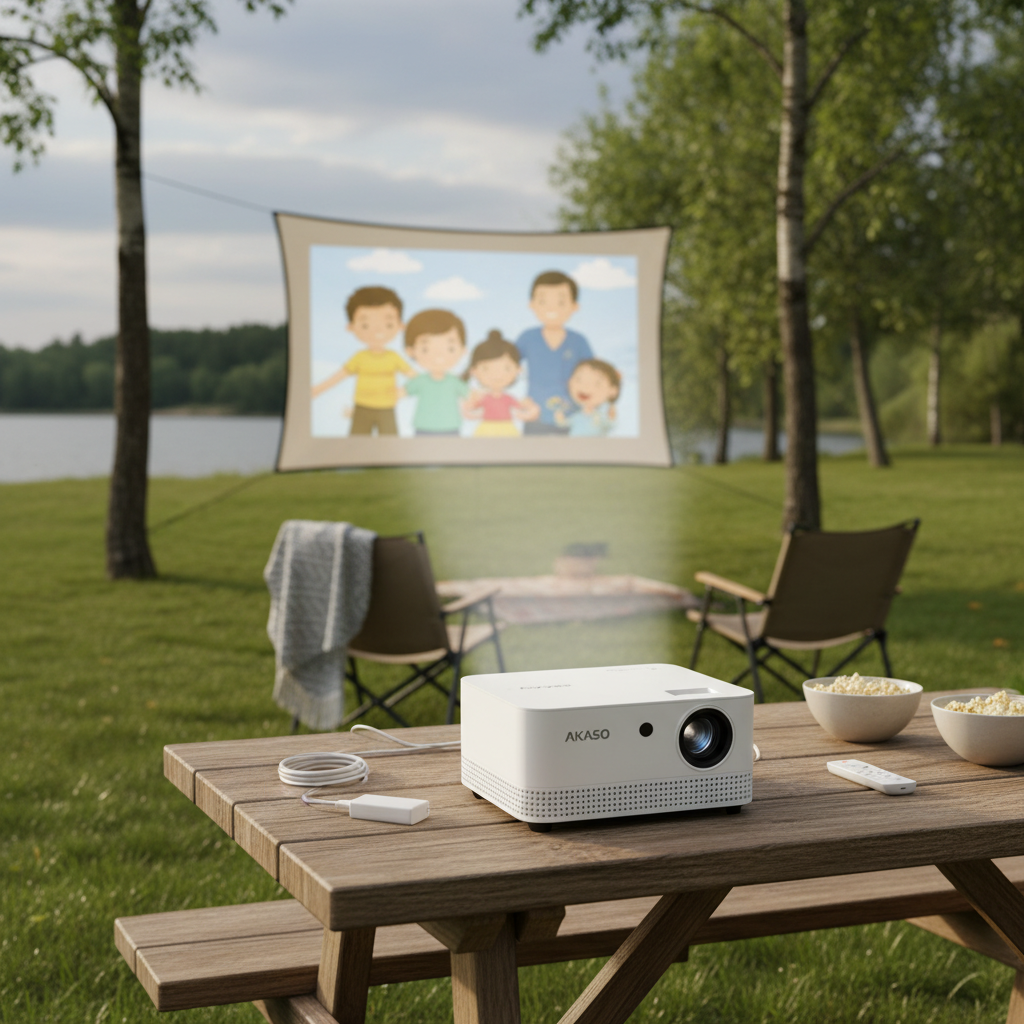
One of the primary appeals of a mini projector is its compact size and ease of transport. Devices like the Akaso WT50 are designed to be incredibly lightweight and small, often fitting comfortably in your hand or a small bag. This makes them perfect for impromptu movie nights, camping trips, or presentations on the go. The trade-off for such portability is often a compromise in brightness and robust internal components.
Lamp Life
Mini projectors typically use LED light sources, which boast significantly longer lifespans compared to traditional projector lamps. An LED lamp can last upwards of 20,000 to 30,000 hours, virtually eliminating the need for costly lamp replacements throughout the projector’s lifetime. This contributes to the overall value of a budget mini projector.
Connectivity
Versatile connectivity options are essential for any modern projector. Look for HDMI, USB, and AV ports for wired connections to laptops, gaming consoles, or media players. Wireless capabilities like Wi-Fi and Bluetooth further enhance flexibility, allowing for screen mirroring from smartphones or tablets, and connecting to external audio devices. Many Akaso mini projectors feature a robust suite of connectivity options, including AirPlay and Miracast.
Built-in Speakers
While dedicated home theater systems or external Bluetooth speakers offer superior audio, a mini projector with decent built-in speakers provides convenience for casual listening. For small rooms or personal use, the integrated speakers on an Akaso mini projector can be sufficient, though they may lack the volume and depth required for larger gatherings.
Akaso Mini Projector (WT50): A Deep Dive
The Akaso WT50 stands out as a prime example of a budget-friendly mini projector, designed for ultimate portability and casual entertainment.
This pico projector employs DLP technology, delivering clear and vibrant images, especially in dark environments. Its native resolution is 854×480 pixels, capable of supporting 1080p input, which ensures a decent picture for movies and videos. The WT50’s compact design (often described as fitting in the palm of your hand) and light weight make it a true travel companion.
A key feature is its built-in rechargeable battery, offering up to 2.5 hours of playback, perfect for a movie on the go without needing a power outlet. It runs on an Android operating system (versions like Android 7.1 or 9.0 have been noted), granting access to various streaming apps directly from the Google Play Store. Connectivity is comprehensive, including HDMI, USB, and wireless mirroring via AirPlay and Miracast, along with Bluetooth for external audio. The inclusion of a mini tripod in the package adds immediate versatility for setup.
Pros of the Akaso WT50:
- Ultra-Portable: Extremely compact and lightweight, easy to carry anywhere.
- Value for Money: Offers a solid feature set for its affordable price point.
- Ease of Use: Simple setup and user-friendly interface with touch controls.
- Versatile Connectivity: Multiple wired and wireless options for various devices.
- Built-in Battery: Enables true on-the-go entertainment.
- Vibrant Colors: DLP technology provides good color reproduction in dark settings.
Cons of the Akaso WT50:
- Low Brightness: At around 50 ANSI lumens, it’s strictly for very dark rooms.
- Modest Sound: Built-in speakers are acceptable but lack power for larger spaces.
- Battery Life: 2.5 hours may not be enough for extended movie marathons.
- Native Resolution: While supporting 1080p input, its native 854×480 resolution isn’t Full HD.
- Potential for Wireless Glitches: Some users report occasional drops or slower performance with wireless mirroring.
“The Akaso WT50 is a testament to how far budget mini projectors have come. It prioritizes portability and convenience without completely sacrificing picture quality, making it a stellar choice for spontaneous movie nights.”
Comparing Budget Mini Projectors
When considering a budget mini projector, it’s helpful to see how options stack up. The Akaso WT50 represents the ultra-portable, entry-level segment, while other budget projectors might offer slightly more brightness or resolution at a slightly higher price.
| Feature | Akaso WT50 (The Budget Pick) | Typical Entry-Level Mini Projector | Mid-Range Portable Projector |
|---|---|---|---|
| Price Range | Typically under $150 | $100 – $250 | $250 – $500 |
| Brightness | 50 ANSI Lumens | 100-200 ANSI Lumens | 300-500 ANSI Lumens |
| Native Resolution | 854 x 480 (supports 1080p) | 800 x 480 or 1280 x 720 (supports 1080p) | 1920 x 1080 (Full HD) |
| Display Tech | DLP LED | LCD LED or DLP LED | DLP LED |
| Battery Life | Up to 2.5 hours | 1.5 – 3 hours (if included) | 2 – 4 hours (common) |
| Connectivity | HDMI, USB, Wi-Fi, BT, AirPlay, Miracast | HDMI, USB, AV, basic Wi-Fi, BT | HDMI, USB, Wi-Fi 5/6, BT, Smart OS |
| Smart OS | Android OS (for apps) | Basic smart features or none | Android TV / Google TV for apps |
| Portability | Excellent (pocket-sized) | Very Good | Good (compact, but larger) |
| Key Advantage | Extreme portability, value | Better brightness than pico projectors | Full HD, higher brightness, advanced features |
| Consideration | Requires very dark room | Still best in dark rooms | Can handle some ambient light |
Where to Purchase Your Mini Projector
Finding a reliable vendor is just as important as choosing the right projector. For the Akaso mini projector and similar budget picks, major online retailers are often the best bet, offering competitive pricing, customer reviews, and return policies. Look for deals during seasonal sales or special promotions. Always verify the seller’s reputation and read recent reviews to ensure a smooth purchasing experience.
Setting Up and Maintaining Your Akaso Mini Projector
Getting started with your Akaso mini projector is straightforward.
- Placement: Position the projector on a stable surface or the included tripod, facing your projection surface (a flat, light-colored wall or screen).
- Power On: Connect the power adapter or ensure the built-in battery is charged, then power on the device.
- Focus & Keystone: Adjust the focus ring until the image is sharp. Use keystone correction (manual or auto, if available) to square the image if the projector isn’t perfectly perpendicular to the screen.
- Connect Source: Plug in your HDMI device, USB drive, or connect wirelessly via Wi-Fi or Bluetooth for screen mirroring or streaming apps.
To extend your projector’s lifespan, keep it clean by periodically wiping the lens with a soft, lint-free cloth. Ensure proper ventilation to prevent overheating, and store it in a cool, dry place when not in use. Avoid dropping it, as delicate internal components can be damaged.
Troubleshooting Common Issues
Even with user-friendly devices like the Akaso mini projector, you might encounter minor hiccups.
- Blurry Image: Adjust the focus ring. If still blurry, check the projection distance as per the manual.
- No Sound: Ensure the volume on both the projector and the source device is up. Check audio output settings on your source. If using Bluetooth, ensure it’s correctly paired.
- No Connection: Double-check all cables (HDMI, USB). For wireless connections, ensure both devices are on the same Wi-Fi network and that screen mirroring features are properly activated. Restarting both devices can often resolve connectivity issues.
- Image Too Dim: Confirm you are in a sufficiently dark environment. Budget projectors struggle in ambient light.
Your Mini Projector Buying Guide
Making an informed decision is key to enjoying your new mini projector.
Define Your Usage Needs
What will you primarily use the mini projector for? If it’s for casual movies in a dark room or portable presentations, a budget pick like the Akaso WT50 is excellent. For gaming or well-lit environments, you might need to consider a higher-brightness model.
Set a Realistic Budget
Determine how much you’re willing to spend. Remember that while the Akaso WT50 is a great budget pick, increasing your budget can unlock features like higher native resolution, brighter output, or more robust sound.
Read User Reviews
Look for honest feedback from other users. Pay attention to comments on brightness, sound quality, ease of use, and connectivity, as these are common areas where budget projectors differ.
Compare Specifications
Use comparison tables (like the one above) and product descriptions to weigh the features that matter most to you against the price. Don’t solely rely on “supported resolution”; always check the “native resolution.”
Conclusion
The Akaso mini projector, epitomized by models like the WT50, carves out a significant niche in the crowded projector market as an excellent budget pick. It delivers on the promise of portability and casual entertainment at an accessible price point. While its 50 ANSI lumen brightness and 854×480 native resolution necessitate a dark viewing environment, its robust connectivity, built-in battery, and Android OS make it a versatile and convenient gadget for movies on the go, backyard screenings, or simple presentations.
If you’re seeking a compact, easy-to-use mini projector that won’t break the bank and are comfortable with its low-light limitations, the Akaso WT50 could be your perfect companion. Are you ready to transform any dark space into your personal cinema?