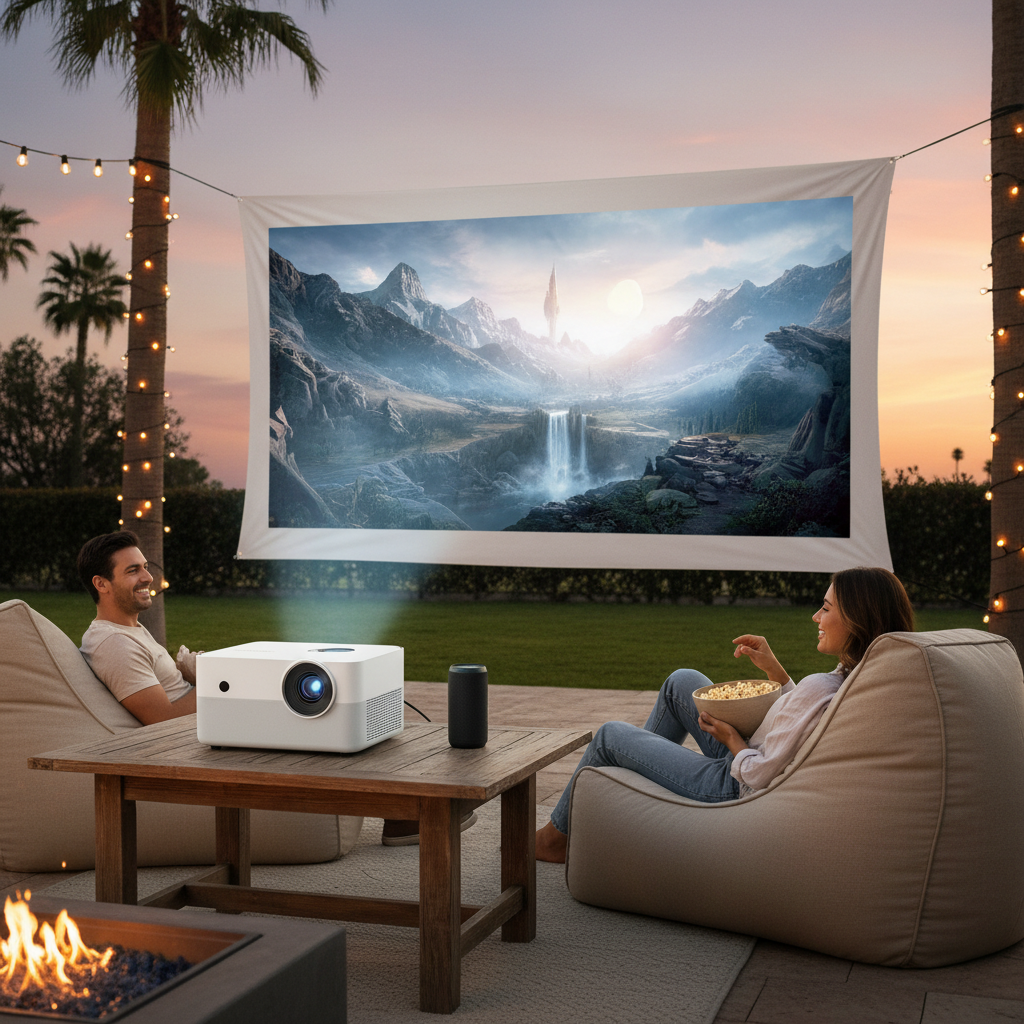
Imagine transforming any space into a captivating cinematic experience, a vibrant gaming arena, or an engaging presentation hub – all without the clutter of cables. Mini projectors with Bluetooth audio make this vision a reality, offering unparalleled portability and versatility for both indoor and outdoor entertainment. These compact devices are revolutionizing how we consume media, bringing big-screen excitement wherever you go. This comprehensive guide will help you navigate the exciting world of mini projectors with Bluetooth audio, exploring essential features, top models, and practical tips to ensure you find the perfect device for your needs and budget.
Understanding Mini Projectors with Bluetooth Audio
Mini projectors are designed for ultimate portability, fitting easily into bags and backpacks, making them ideal companions for travel, outdoor movie nights, or impromptu presentations. The integration of Bluetooth audio is a game-changer, allowing seamless wireless connection to external speakers or headphones for superior sound quality, vastly improving the overall immersion. While compact, these projectors leverage various technologies to project clear and vibrant images.
The primary projection technologies found in mini projectors include:
- LED (Light Emitting Diode): Known for their long lifespan, energy efficiency, and quick startup/shutdown times. They often produce good color saturation.
- DLP (Digital Light Processing): Utilizes microscopic mirrors to create images, offering excellent contrast and sharp visuals, often found in higher-end portable units.
- LCD (Liquid Crystal Display): Uses three separate LCD panels for red, green, and blue light, often providing a good balance of brightness and color accuracy.
- Laser: A newer technology offering exceptional brightness, vivid colors, and an even longer lifespan, often seen in premium portable projectors like the LG CineBeam Q.
Essential Features to Consider When Buying a Mini Projector with Bluetooth Audio
Choosing the right mini projector involves balancing performance with your specific needs. Here are the crucial features to evaluate:
Brightness (ANSI Lumens)
|
Our Picks for the Best Mini projector in 2026
As an Amazon Associate I earn from qualifying purchases.
|
||
| Num | Product | Action |
|---|---|---|
| 1 | HP Smart Mini Projector with WiFi and Bluetooth, Short Throw Projector, Native 1080P Full HD, Official Licensed Apps, Auto Focus & Keystone, Portable Movie Projector for Bedroom & Outdoor |

|
| 2 | Mini Projector, ELEPHAS Portable Projector for iPhone, 7000L with Synchronize Smartphone Screen, Movie Projector with 1080P HD/200 Screen Support, Compatible with Android/iOS/TV Stick/HDMI/USB/SD |
|
| 3 | [Built-in Apps] CLOKOWE Mini Projector with WiFi and Bluetooth, 2026 Upgraded 1080P Smart Portable Projector with 180° Rotation, Auto Keystone, Compatible with iPhone/Android/Laptop/TV Stick/HDMI/USB |
|
| 4 | Mini Projector with WiFi 6 and Bluetooth 5.4 Built-in Apps for Bedroom Portable Projector Android 14 Smart Auto Keystone 1080P 4K Support Compatible with iOS/HDMI/TV Stick VisualCube 300 White |
|
| 5 | Mini Projector with Wifi 6 and Bluetooth5.4, Portable Projector 4K Support, Android 14 Smart Proyector with 200ASIN & Auto Keystone, Alwtniet HY300Pro Small Proyector for Bedroom, Movie, Outdoor |
|
| 6 | Optoma 4K UHD Projector HDR High Brightness Home Theater DLP Technology White Compact Design Gaming Ready Streaming Bundle HDMI Cable CPS 12 Month Protection Plan Included |
|
| 7 | Magcubic Mini Projector with WiFi 6 and Bluetooth 5.4, Portable Projector 4K Support, 5W Soundbase Speaker, Auto Vertical Keystone 180°Rotatable Smart Proyector for Movie Home Outdoor |
|
| 8 | CiBest Mini Projector, Upgraded Full HD 1080P Support Video Projector, Portable Small Movie Projector, Compatible with iOS/Android/Windows/TV Stick/Box/USB/HDMI |
|
| 9 | HAPPRUN Native 1080P Bluetooth Mini Projector, Full HD Portable Outdoor Movie Projector with Built-in Speaker, Compatible with Smartphone, HDMI, USB, AV, Fire Stick, PS5 for Home, Bedroom, Outdoor Use |
|
| 10 | 【Built-in APPS & Electric Focusing & 210° Rotation】Mini Projector With Wifi And Bluetooth, 1080P Portable Projector, Movie Projector for Bedroom, Supports Smartphones/TV Stick/iPad/PS5/Laptop/HDMI/USB |
|
Brightness, measured in ANSI Lumens, is paramount for image visibility, especially in rooms with ambient light or outdoors. For optimal indoor viewing, a projector with 1,000 to 2,500 lumens may suffice. However, for outdoor use or brighter environments, aiming for at least 3,000 ANSI lumens is recommended to ensure a clear and vibrant picture. Many mini projectors typically offer ranges up to around 1000 ANSI lumens, with some models like the Anker Nebula Capsule 3 Laser featuring 300 lumens and the Anker Nebula Solar Portable offering 400 ANSI lumens, which are well-suited for darker settings.
Resolution: Clarity on the Go
The resolution dictates the sharpness and detail of your projected image. Common resolutions for mini projectors include:
- 480p (Standard Definition): Entry-level, suitable for casual viewing where high detail isn’t critical.
- 720p (HD): Offers a noticeable improvement over 480p, providing clearer images for movies and general entertainment.
- 1080p (Full HD): The most common and recommended resolution for a sharp, detailed picture, perfect for home cinema and detailed presentations. Many modern mini projectors offer native 1080p resolution.
- 4K Support/Native 4K: Some high-end mini projectors can support 4K input (downscaling to native resolution) or even offer pixel-shifted 4K for incredible detail, like the LG CineBeam Q.
Portability and Battery Life
The essence of a mini projector is its portability. Look for lightweight, compact designs that are easy to carry. Integrated batteries are a significant advantage for outdoor use or locations without power outlets. Battery life typically ranges from 2 to 2.5 hours for models like the Anker Nebula Capsule and XGIMI Halo+, which is often enough for a full movie. Some models also support USB-C Power Delivery, allowing you to extend usage with compatible power banks.
Connectivity Options: Beyond Bluetooth
While Bluetooth audio is a key feature, robust connectivity options enhance versatility.
- Wired Connections: Essential ports include HDMI for connecting laptops, gaming consoles, and streaming devices, and USB for media playback from flash drives. Some projectors also include AV inputs.
- Wireless Connectivity:
- Wi-Fi: Crucial for streaming content directly from the internet or casting from devices. Look for dual-band Wi-Fi (2.4GHz and 5GHz) or even Wi-Fi 6 for faster, more stable connections.
- Screen Mirroring: Technologies like AirPlay (for Apple devices) and Miracast (for Android/Windows) allow you to wirelessly mirror your device’s screen onto the projector.
- Smart Operating Systems: Many modern mini projectors feature built-in smart TV platforms such as Android TV, Google TV, webOS, or Roku TV, providing direct access to streaming apps like Netflix, YouTube, and more, eliminating the need for external streaming sticks.
Integrated Speakers vs. External Bluetooth Audio
Most mini projectors come with built-in speakers. While these are convenient for casual use, they often lack the depth and volume for a truly immersive experience due to their compact size. For superior sound, the ability to connect to external Bluetooth speakers or headphones is invaluable. Many users opt to pair their projectors with dedicated sound systems for a home theater feel. Some projectors do offer enhanced built-in audio with technologies like Dolby Audio or speakers from brands like JBL, but external options usually provide a richer soundstage.
Advanced Image Correction
For easy setup and optimal viewing, advanced image correction features are highly beneficial:
- Auto Keystone Correction: Automatically adjusts the image to be rectangular, even if the projector is placed at an angle.
- Auto Focus: Ensures a sharp image without manual adjustments.
- Intelligent Screen Alignment: Detects the projection surface and automatically adjusts the image to fit.
- Obstacle Avoidance: Identifies and scales the image to avoid obstacles on the projection surface.
Top Picks: A Comparison of Leading Mini Projectors with Bluetooth Audio
When exploring the market for the best mini projectors with Bluetooth audio, several models stand out for their features and performance. Here’s a comparative overview of some popular options:
| Model | Resolution | Brightness (ANSI Lumens) | Battery Life | Smart Features | Notable Audio | Best for | Price Range |
|---|---|---|---|---|---|---|---|
| Anker Nebula Capsule 3 Laser | 1080p (FHD) | 300 | ~2.5 hours | Android TV, Google Play Store | Dolby Digital Plus, Dual Speakers | Premium Portability, Smart Home | Mid-High |
| LG CineBeam Q | 4K (pixel-shift) | Up to 500 (RGB Laser) | No built-in (USB-C PD compatible) | webOS, Netflix, AirPlay | Built-in speaker (Bluetooth out) | Ultimate Portability, Image Quality | High |
| XGIMI Halo+ | 1080p (FHD) | 900 | ~2.5 hours | Android TV, Google Assistant | Harman Kardon speakers | Bright Portable, Gaming | Mid-High |
| Samsung The Freestyle 2nd Gen | 1080p (FHD) | 230 | No built-in (USB-C PD compatible) | Tizen OS, Gaming Hub | 360-degree speaker | Lifestyle, Smart Streaming | Mid-High |
| Vankyo Leisure 470 Pro | 1080p (FHD) | 150 (ISO) / 8000 (Lux) | No | Limited (via HDMI/USB) | Built-in speaker (Bluetooth out) | Budget-Friendly, Basic Use | Low |
“The advancement in mini projector technology, especially with integrated Bluetooth and smart features, means users no longer have to compromise on quality for portability. It’s truly a new era for flexible entertainment.”
Where to Purchase Your Mini Projector
Mini projectors with Bluetooth audio are widely available through various reputable channels:
- Online Retailers: Platforms like Amazon, Best Buy, and Target offer a vast selection, often with competitive pricing, detailed product descriptions, and customer reviews.
- Electronics Stores: Major electronics chains typically stock a range of models, allowing you to see some devices in person and consult with sales associates.
When purchasing, always verify the warranty, return policy, and customer support offered by the seller and manufacturer. This ensures peace of mind with your investment.
Maximizing Your Mini Projector Experience: Usage and Maintenance
To get the most out of your mini projector and ensure its longevity, proper usage and maintenance are key.
Setting Up Your Mini Projector
Setting up a mini projector is generally straightforward:
- Power On: Connect the projector to power or ensure the battery is charged.
- Connect Source: Plug in your desired media source via HDMI/USB, or connect wirelessly via Wi-Fi for streaming apps or screen mirroring.
- Position and Adjust: Place the projector at the desired distance from the screen or wall. Use auto-focus and auto-keystone correction if available, or manually adjust the focus ring and keystone to achieve a clear, rectangular image.
- Pair Bluetooth Audio: Navigate to the projector’s settings menu, enable Bluetooth, and pair with your external Bluetooth speaker or headphones.
Maintaining Your Projector for Longevity
A few simple maintenance steps can significantly extend your projector’s lifespan:
- Lens Cleaning: Gently wipe the lens with a microfiber cloth designed for optics to remove dust and fingerprints. Avoid harsh chemicals.
- Ventilation: Ensure the projector’s ventilation ports are clear and unobstructed to prevent overheating. Operate the projector in a well-ventilated area.
- Proper Storage: When not in use, store your projector in a cool, dry place, ideally in a protective case, to shield it from dust and impacts.
Troubleshooting Common Bluetooth Audio Issues
While Bluetooth audio offers convenience, users occasionally encounter issues. Here’s how to address the most common problems:
Addressing Audio Delay (Lip Sync)
Audio delay, or lip sync issues, can be frustrating, where the audio doesn’t perfectly match the video. This often results from the encoding and decoding process inherent in Bluetooth transmission.
- Use aptX/aptX-LL Devices: If your projector and Bluetooth speaker both support aptX or aptX Low Latency codecs, use them. These are designed to minimize delay, though some projectors may only support standard codecs like SBC.
- Consider Wired Connections: For critical viewing where perfect sync is essential, connecting wired speakers or headphones via the projector’s audio output (e.g., 3.5mm jack) will eliminate Bluetooth delay.
- Adjust Audio Settings: Some projectors or streaming devices may have audio delay compensation settings that you can fine-tune. Experiment with different audio profiles on your projector.
- Pair with Streaming Device: If you’re using an external streaming stick (like a Google Chromecast), try pairing your Bluetooth audio device directly to the streaming stick instead of the projector.
Resolving Connectivity Drops and Low Volume
- Restart Everything: A simple restart of both your projector and the Bluetooth audio device can resolve temporary glitches causing connection drops or instability.
- Clear Cache: On smart projectors, clearing the system cache can fix connectivity errors. Check your projector’s settings for this option.
- Unpair and Re-pair: Remove the Bluetooth device from your projector’s paired device list and then re-initiate the pairing process for a fresh connection.
- Firmware Updates: Ensure your projector’s firmware is up to date. Manufacturers often release updates that improve Bluetooth performance and stability.
- Minimize Interference: Keep your projector and Bluetooth audio device away from other Wi-Fi routers, cordless phones, microwaves, or other electronics that might cause interference.
- Optimize Volume Levels: If the volume is too low, ensure the media source (e.g., streaming app, laptop) volume is turned up high, then maximize the projector’s internal volume, and finally control the overall volume from your Bluetooth speaker. If using battery-powered speakers, try plugging them into power.
Your Ultimate Buying Guide: Making the Right Choice
Making the right choice involves a personalized approach to ensure the mini projector aligns perfectly with your lifestyle.
Define Your Primary Use Case
What will you mainly use your mini projector for? If it’s for outdoor movie nights, prioritize brightness, battery life, and durability. For a dedicated home cinema, focus on native resolution, contrast, and smart features. Gamers will need low input lag, while business users might prioritize connectivity and brightness for presentations.
Set a Realistic Budget
Mini projectors come in a wide price range. Determine how much you’re willing to spend and look for the best features within that budget. Remember that investing a little more often yields significant improvements in image quality, brightness, and smart functionality.
Read User Reviews and Expert Opinions
Before committing, scour online reviews from other users and consult expert reviews from tech publications. This provides objective insights into real-world performance, reliability, and potential quirks of specific models.
Compare Models and Features
Use comparison tables and spec sheets to weigh the pros and cons of your top choices. Prioritize the features that are most essential for your primary use case, whether it’s native 1080p, long battery life, or a specific smart OS.
Conclusion
Mini projectors with Bluetooth audio have redefined portable entertainment, offering remarkable flexibility and immersive experiences in a compact package. By considering key features like brightness, resolution, portability, and smart connectivity, you can confidently choose a device that perfectly suits your needs. While minor challenges like audio lag can arise, simple troubleshooting steps ensure a smooth and enjoyable viewing or listening experience. Embrace the freedom these devices offer, and transform any wall into a gateway to endless entertainment.
What exciting new adventures will your mini projector unlock for you?
Frequently Asked Questions
Can I use a mini projector in a bright room?
Using a mini projector in a bright room is challenging, as most mini projectors are not powerful enough to combat significant ambient light. For optimal viewing, a dark environment is always recommended. If you must use it in a well-lit space, look for models with the highest possible ANSI lumen rating (3000+ is ideal, though rare for mini projectors).
Do all mini projectors have Bluetooth?
No, not all mini projectors come with Bluetooth capabilities. While it’s becoming a standard feature in many modern portable projectors, especially for audio output, some budget or older models might only offer wired audio options or rely on their built-in speakers without Bluetooth connectivity. Always check the specifications to confirm Bluetooth support.
What is ANSI Lumens and why is it important?
ANSI Lumens is a standardized measurement of a projector’s light output or brightness. It’s crucial because it directly impacts how clear and vibrant your projected image will appear, especially when there’s ambient light. A higher ANSI lumen rating means a brighter image, allowing for better visibility in less-than-dark conditions.
How long do mini projector lamps last?
Most modern mini projectors use LED or laser light sources, which boast significantly longer lifespans compared to traditional lamp-based projectors. LED lamps can last anywhere from 20,000 to 30,000 hours, while laser light sources can exceed 20,000 hours, effectively meaning they can last for many years of regular use without needing replacement.
Can I stream Netflix directly from a mini projector?
Yes, many smart mini projectors come with built-in operating systems like Android TV, Google TV, webOS, or Roku TV, which allow you to download and stream apps like Netflix directly. However, some projectors, especially more basic models, might require an external streaming device (e.g., Fire TV Stick, Chromecast) connected via HDMI to access Netflix and other streaming services.