Projectors are indispensable tools for everything from captivating home theater experiences to essential business presentations and dynamic educational settings. However, a common adversary threatens their longevity and performance: dust. This ubiquitous menace can quietly degrade image quality, shorten a projector’s lifespan, and inflate maintenance costs. Investing in a dustproof projector is a strategic decision that promises consistent, high-quality visuals and significantly extended operational life. This comprehensive guide will explore the critical role of dustproofing, the technologies that make it possible, key selection criteria, popular models, and tips for maximizing your projector’s durability.
The Silent Threat: How Dust Harms Projectors
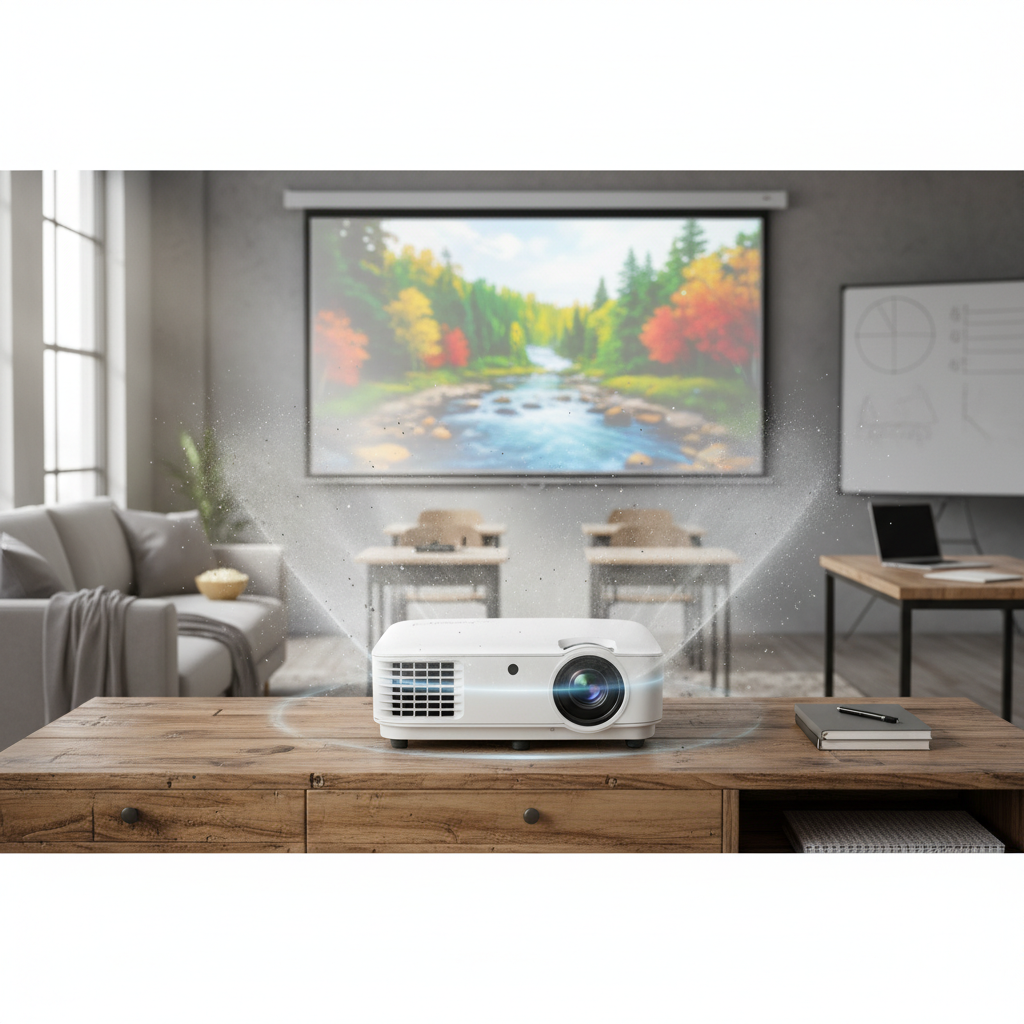
Dust, often an invisible enemy, poses a significant threat to projector health and performance. Even in seemingly clean environments, microscopic particles can infiltrate the projector’s internal mechanisms, leading to a cascade of problems. As air is drawn in for cooling, dust, pollen, pet hair, and even chalk residue (in educational settings) accumulate on sensitive optical components such as the lens, color wheel, phosphor wheel, DMD chip, and the light source itself.
This accumulation, sometimes referred to as “dust cake,” can cause several critical issues. It leads to a noticeable decay in color accuracy and brightness, making images appear dull and less vibrant. Over time, dust buildup also obstructs airflow, causing internal temperatures to rise and potentially leading to overheating. This sustained heat can permanently damage delicate components, resulting in flickering, abnormal color reproduction, signal detection failures, and even complete system shutdowns. Ultimately, dust significantly shortens a projector’s operational lifespan and dramatically increases its total cost of ownership (TCO) due to frequent cleaning and potential repairs.
Understanding Dustproof Projector Technology
Manufacturers have developed sophisticated technologies to combat dust and safeguard projector internals, ensuring prolonged reliability and consistent image quality. These innovations primarily focus on sealing critical components and managing airflow effectively.
Sealed Optical Engines
|
Our Picks for the Best Mini projector in 2026
As an Amazon Associate I earn from qualifying purchases.
|
||
| Num | Product | Action |
|---|---|---|
| 1 | HP Smart Mini Projector with WiFi and Bluetooth, Short Throw Projector, Native 1080P Full HD, Official Licensed Apps, Auto Focus & Keystone, Portable Movie Projector for Bedroom & Outdoor |

|
| 2 | Mini Projector, ELEPHAS Portable Projector for iPhone, 7000L with Synchronize Smartphone Screen, Movie Projector with 1080P HD/200 Screen Support, Compatible with Android/iOS/TV Stick/HDMI/USB/SD |
|
| 3 | Mini Projector with WiFi 6 and Bluetooth 5.4 Built-in Apps for Bedroom Portable Projector Android 14 Smart Auto Keystone 1080P 4K Support Compatible with iOS/HDMI/TV Stick VisualCube 300 White |
|
| 4 | Magcubic Mini Projector with WiFi 6 and Bluetooth 5.4, Portable Projector 4K Support, 5W Soundbase Speaker, Auto Vertical Keystone 180°Rotatable Smart Proyector for Movie Home Outdoor |
|
| 5 | Optoma 4K UHD Projector HDR High Brightness Home Theater DLP Technology White Compact Design Gaming Ready Streaming Bundle HDMI Cable CPS 12 Month Protection Plan Included |
|
| 6 | CiBest Mini Projector, Upgraded Full HD 1080P Support Video Projector, Portable Small Movie Projector, Compatible with iOS/Android/Windows/TV Stick/Box/USB/HDMI |
|
| 7 | HAPPRUN Native 1080P Bluetooth Mini Projector, Full HD Portable Outdoor Movie Projector with Built-in Speaker, Compatible with Smartphone, HDMI, USB, AV, Fire Stick, PS5 for Home, Bedroom, Outdoor Use |
|
| 8 | 【Built-in APPS & Electric Focusing & 210° Rotation】Mini Projector With Wifi And Bluetooth, 1080P Portable Projector, Movie Projector for Bedroom, Supports Smartphones/TV Stick/iPad/PS5/Laptop/HDMI/USB |
|
| 9 | [Built-in Apps] CLOKOWE Mini Projector with WiFi and Bluetooth, 2026 Upgraded 1080P Smart Portable Projector with 180° Rotation, Auto Keystone, Compatible with iPhone/Android/Laptop/TV Stick/HDMI/USB |
|
| 10 | Mini Projector with Wifi 6 and Bluetooth5.4, Portable Projector 4K Support, Android 14 Smart Proyector with 200ASIN & Auto Keystone, Alwtniet HY300Pro Small Proyector for Bedroom, Movie, Outdoor |
|
At the core of most dustproof designs is the sealed optical engine. This design physically encloses the most sensitive optical components – including the imaging chip (DLP or LCD panels), color wheel, and light source – creating a barrier against dust ingress. For DLP (Digital Light Processing) projectors, this sealed design effectively protects the DLP chip, color wheel, and light components, eliminating common issues like color wheel sensor failures and visible spots on the image. While some “fully sealed” LCD projectors may still incorporate filters, the goal remains to prevent direct dust exposure to the crucial optical path.
Advanced Filtering Systems
Beyond sealed chambers, many dustproof projectors utilize advanced filtering systems to capture airborne particles before they can enter. High-performance electrostatic filters or multi-layered filters can trap a significant percentage of fine particulate matter, including PM10 and even PM2.5 particles. These filters are engineered to provide robust protection without unduly restricting airflow, which is vital for maintaining optimal operating temperatures.
Strategic Airflow and Cooling
Sealing optical components can lead to increased internal heat. Therefore, effective cooling systems are paramount in dustproof projectors. Manufacturers address this by improving the heat resistance of critical optical devices and developing highly efficient thermal management systems. This includes precise control over air intake and exhaust, ensuring that cooling air circulates only through designated, filtered pathways, preventing dust from entering through other gaps.
IP Ratings (Ingress Protection)
A key indicator of a projector’s dustproof capabilities is its Ingress Protection (IP) rating. This international standard specifies the degree of protection provided against dust and water. For dustproofing, you’ll often see ratings like IP5X or IP6X.
- IP5X signifies “dust protected,” meaning that the ingress of dust is not entirely prevented but will not interfere with the satisfactory operation of the equipment.
- IP6X denotes “dust tight,” indicating that no ingress of dust is permitted whatsoever.
These ratings are typically achieved through rigorous testing, where projectors are subjected to hours of operation in dust-filled chambers to simulate years of exposure.
Durable Light Sources
Another significant factor contributing to a projector’s long life, particularly in conjunction with dustproofing, is the type of light source. Modern dustproof projectors frequently employ LED (Light Emitting Diode) or laser light sources. Unlike traditional lamps, which have a relatively short lifespan (2,000-5,000 hours), LED and laser light sources boast impressive longevity, often rated for 20,000 to 30,000 hours or even more. This drastically reduces the need for replacements and associated maintenance.
Key Criteria for Choosing a Dustproof Projector
Selecting the ideal dustproof projector requires careful consideration of your specific needs and the environment in which it will operate.
Light Source
Prioritize projectors with LED or laser light sources for maximum longevity and minimal maintenance. These solid-state sources typically last 10-15 times longer than traditional lamps, making them a wise investment for long-term use.
Brightness (ANSI Lumens)
The projector’s brightness, measured in ANSI lumens, determines how well the image will appear in different lighting conditions. For dedicated dark home theaters, lower lumens might suffice, but for environments with ambient light (classrooms, meeting rooms, or outdoor use), higher ANSI lumen ratings (e.g., 2000+ for indoor, 1000+ for dedicated outdoor use after dark) are crucial for a clear, vibrant picture.
Resolution
Consider the desired image clarity. While 1080p (Full HD) offers excellent detail for most content, 4K UHD (Ultra High Definition) provides an even sharper, more immersive experience, especially on larger screens. Some portable models may offer lower resolutions for compactness.
Dustproof Rating (IP Code)
Always look for a projector with an official IP rating, preferably IP5X or higher. This certification offers an objective measure of its resistance to dust ingress, ensuring its reliability in dusty environments.
Connectivity Options
Ensure the projector supports the input options you need. Common connections include HDMI (for video sources like Blu-ray players, streaming sticks, gaming consoles), USB (for media playback or powering devices), and wireless options like Wi-Fi and Bluetooth for screen mirroring or connecting external audio.
Portability vs. Installation
Dustproof projectors come in various sizes. If you need to move your projector frequently, opt for a compact, portable model. For permanent installations, larger, feature-rich models might be more suitable. Consider features like auto-focus and auto-keystone correction for easier setup if portability is key.
Brand Reputation and Warranty
Choose reputable brands known for quality and customer support. A strong warranty can provide peace of mind for your long-term investment. Brands like BenQ, Epson, and Optoma are frequently cited for their robust designs and commitment to longevity.
Popular Dustproof Projector Models and Brands
The market offers a range of dustproof projectors catering to diverse needs. Brands like BenQ are renowned for their Dust Guard™ technology, featuring sealed optical engines and robust IP ratings like IP5X and IP6X, often paired with long-lasting laser light sources. Epson also offers projectors with advanced dust protection, sealing optical devices and light source units, and incorporating high-performance electrostatic filters.
For general home and portable use, models such as the TOPTRO TR23 Mini Projector, VGKE Smart 4K Projector, ULTIMEA Apollo P50 Smart Projector, and Cibest 4K Projector are frequently highlighted for their dustproof designs, often supporting 1080p or 4K resolution with robust brightness. These often include smart features like built-in streaming apps and auto-focus for ease of use.
In the higher-performance segment, models like the BenQ X3100i offer 4K resolution, high brightness, and robust dust protection for both movies and gaming. For outdoor enthusiasts, the Anker Nebula Mars 3 is noted for its rugged, dustproof build and excellent battery life, making it ideal for open-air movie nights. These examples underscore the growing trend towards more durable, sealed projector designs across various price points and applications.
“In environments where dust is a constant challenge, a truly dustproof projector isn’t just a luxury; it’s a necessity for preserving picture quality and preventing premature failure.” – An Expert in Projector Technology
Maximizing Your Dustproof Projector’s Lifespan
While investing in a dustproof projector is an excellent first step towards longevity, proper usage and ongoing care are still crucial for maximizing its operational life.
Even with advanced dust protection, good ventilation remains vital. Ensure your projector is placed in a well-ventilated area with ample space around its air intake and exhaust vents. Avoid placing it in enclosed cabinets or tight spaces where heat can build up, as excessive heat can still degrade internal components over time. Regularly check that the vents are clear and unobstructed by objects like books or fabrics.
If your dustproof projector utilizes external filters, adhere to the manufacturer’s recommendations for cleaning or replacement. While internal components are sealed, these external filters are the first line of defense and can become clogged. For portable dustproof projectors, always use a protective case during transport and storage to shield it from physical impacts and prevent dust accumulation during non-use. Additionally, avoid exposing your projector to extreme temperatures or high humidity, as these environmental factors can also contribute to reduced lifespan.
Conclusion
In a world filled with pervasive dust and airborne particles, selecting a dustproof projector is a discerning choice for anyone seeking long-term reliability and uncompromised visual performance. By understanding how dust impacts projectors and appreciating the technological advancements that combat it—from sealed optical engines and advanced filters to durable LED and laser light sources—you can make an informed decision. Prioritizing features like a high IP rating, appropriate brightness, and connectivity, coupled with diligent maintenance, will ensure your investment continues to deliver stunning projections for years to come.
What truly defines the lifespan of your projector, and are you ready to invest in its future?
Frequently Asked Questions
What does an IP5X rating mean for projectors?
An IP5X rating signifies that a projector is “dust protected.” This means that while dust may not be entirely excluded, any ingress of dust will not interfere with the satisfactory operation of the equipment, ensuring reliable performance in moderately dusty environments.
Do all laser projectors use dustproof technology?
While many modern laser projectors are designed with sealed optical engines that offer significant dust resistance, it’s not universally true that all laser projectors are fully dustproof. Always check the product specifications for an explicit dustproof rating (like IP5X or IP6X) to confirm the level of protection.
How often should I clean a dustproof projector’s filter?
The frequency of cleaning depends on the specific model and your operating environment. Even dustproof projectors with external filters may require occasional cleaning. Refer to your projector’s user manual for recommended maintenance schedules, typically ranging from every few months to annually, especially in dustier conditions.
Can dustproof projectors be used outdoors?
Yes, many dustproof projectors are suitable for outdoor use, particularly those with higher IP ratings (e.g., IP5X or IP6X) and ruggedized builds. Their sealed designs protect against dust and often offer some resistance to splashes, making them ideal for backyard movie nights or events in challenging outdoor environments. However, always ensure the projector is protected from direct rain and extreme weather conditions.